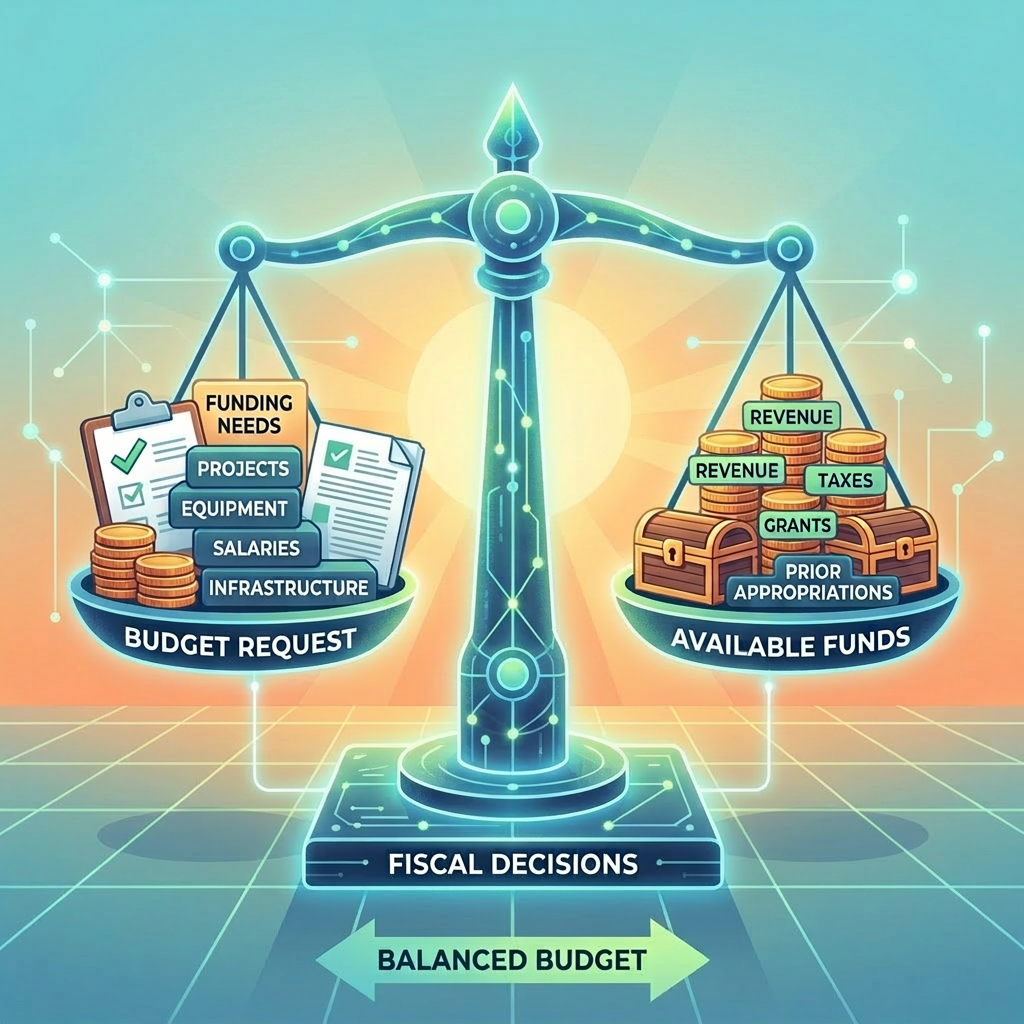
Topic: The Board of Education (BOE) Budget
I spent some time observing the Budget Committee meeting on May 12, and I wanted to share my notes and takeaways with you. The Board of Education budget was the main event, and looking closely at the data, we have some serious numbers—and some strict policy hurdles—to talk about.
Here is what I observed.
1. The Opening and the Reality of Student Proficiency
The meeting opened with public comment, and one resident brought forward some sobering statistics regarding our current CC High School graduates. Her source was a recent article in U.S. News and World Report. It was a stark reminder of the high stakes behind these financial discussions:
- Reading: Only 39% are proficient (which means 61% are not).
- Math: Just 26% are proficient (leaving 74% below proficiency).
When the committee shifted to look at where the BOE money actually goes, I noted that 85% to 86% of the entire budget is tied up in employee salaries and benefits.
A major wildcard I picked up on during the discussion: the exact costs for insurance and retirement contributions are still undefined. The budget currently relies on a 10% estimate for these benefits, but the general consensus in the room seemed to be that this number might be too low.
2. Sizing Up the $10.8 Million Shortfall
As I watched the committee crunch the revenue and spending numbers, the math became a clear cause for concern:
- The Revenue: The school system gets $18.4 million from Cumberland County and $55.4 million in state revenue, bringing total estimated revenue to $73.8 million.
- The Spending: Estimated expenditures are staggering by comparison, sitting at $84.6 million.
That leaves a massive shortfall of $10.8 million.
To cover that gap, the BOE is planning to dip heavily into its savings. They are starting with a fund balance of $18.6 million, but by the time they finish patching this year’s deficit, the projected ending fund balance drops down to a mere $7.8 million.
3. The Compliance Catch-22
This is where the real tension in the meeting happened. Cumberland County financial policy strictly mandates that the county maintain a minimum fund balance equal to 17% of total salary and benefit costs.
I did the math based on what was presented: with salaries and benefits taking up 85% of the total $84.7 million budget, that mandatory 17% safety net requires us to hold $14.4 million in reserves.
Because the BOE’s projected ending balance is only $7.8 million, the proposed budget falls $5.9 million short of meeting the county’s required financial safety net.
While the budget committee did vote to tentatively approve the BOE budget to keep the process moving, it was very clear to me that this is far from over. This budget will have to be adjusted to comply with the minimum fund balance policy before it gets official approval.
Looking Back: Why Do We Have This Policy Anyway?
Watching this unfold made me want to look into the history of why Cumberland County developed this financial policy in the first place.
It turns out this traces back to September 2024, when the County Commission received a formal wake-up call from the State Comptroller regarding the 2025 budget review. Reading the Comptroller’s original warnings, it’s easy to see why the county put these guardrails in place.
On using savings for everyday expenses, the Comptroller stated:
“During a review of the budget we note that the General Purpose School Fund is budgeted to use $7,284,963 of its fund balance and that it appears $6,627,463 is being used for recurring expenditures. Proper financial management calls for recurring expenses to be funded by recurring revenue. We bring this to the attention of the County Commission to prevent future financial instability.”
On the danger of a low safety net, they added:
“During our review we noted that the General Purpose School fund is budgeted to end the fiscal year with a fund balance that is less than two months of expenditures. We recommend the governing body adopt a fund balance policy for all fund types with a requirement to maintain not less than two months of the regular operating revenue or expenditures…”
Craig’s Final Thought
Watching this play out firsthand, it’s clear that balancing a school budget is a massive juggling act. At the end of the day, it is the BOE’s responsibility to figure out how to adjust these numbers and bring the budget into compliance with our county’s financial policy.
It’s definitely a tough challenge—finding a way to fully support our classrooms while keeping that essential financial safety net intact.
The committee’s tentative approval keeps the process moving forward for now, but it leaves us with an interesting question: what happens next? While the policy is on the books, there’s no absolute guarantee on how strictly it will be enforced, or what the outcome will be if these balance requirements are bypassed.
I’ll be watching closely to see how both the BOE and the Commission navigate this puzzle in the coming weeks. Stay tuned!
Leave a Reply